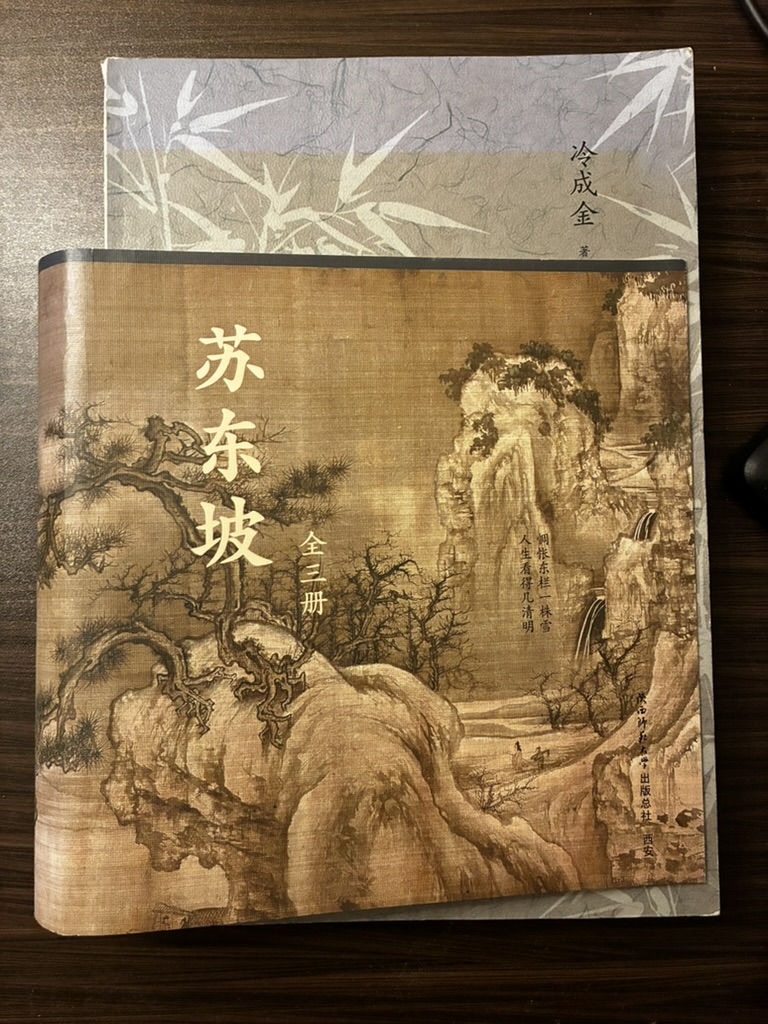
苏东坡传
This is a translation by Claude. The original Chinese version is below.
I rarely read historical narratives before, but when I came across this set of “Su Dongpo” books at graduation, I decided to buy them and have a look. The complete set has three volumes, and I didn’t finish reading them before leaving the country, so I brought them all to the United States.
By now I’ve made it through two volumes, on and off, and at this point in the story Su Shi’s life is already more than half over. After the Crow Terrace Poetry Case, the man who led the Northern Song literary world, the foremost talent of his age, and who would one day serve as chancellor in a time of peace—though his heart still belonged to the nation—had already shed his long robe and headscarf for a coarse hemp jacket and straw sandals, and was out breaking new farmland in the fields of Huangzhou.
The threads of Foyin and Wu Fugu run cleverly through Su Shi’s story, as if hinting, from a later generation’s vantage point, that he was always a wanderer caught between worldly affairs and the Buddhist gate.
Chapter 48 is titled “The Small Boat Drifts Away from Here.” It opens with Emperor Shenzong’s defeat at Yongle: gravely ill, the court now run by eunuchs who extorted money and silk to buy peace with Western Xia through annual tribute, while the Northern Song sank further into decline. I thought back to when Shenzong first took the throne, brimming with ambition to accomplish great things and revive the dynasty, governing with real rigor and diligence. But the Xining Reforms failed, twenty years slipped by, and watching the dynasty’s fortunes run out, even the Son of Heaven could feel like nothing more than a grain of millet adrift on a vast sea. I found myself, unexpectedly, empathizing with the emperor.
When I was young reading history textbooks, I would look disdainfully at those emperors who indulged in wine and pleasure and neglected state affairs, scorning them as incompetent rulers. Looking back now, perhaps they had long understood the truth that “the sober are the most absurd.”
After reading just one more page, I closed the book. In my mind, I silently skipped over the dialectical discussion between Su Zi and his guest, fast-forwarding directly to the last paragraph of “Red Cliff Rhapsody”:
The guest rejoiced and laughed, rinsed the cups and poured more wine. When the food was finished and the cups and plates were in disarray, they lay down together in the boat, not knowing that dawn had broken in the east.
If life could be like this, how carefree and joyful it would be.
我此前很少读历史故事,毕业时划到这套《苏东坡》,索性买了瞧瞧。整套共三册,出国前没能读完,就一起带了美国来。
如今断断续续读了两册,行文至此,苏轼的人生已过大半。乌台诗案后,那北宋文坛领袖、当世第一才子、后世太平宰相,虽仍心系家国,却已脱下长袍头巾,披上麻布短褂,脚踩芒鞋,开荒于黄州田间了。
佛印、吴复古的脉络精巧,穿插于苏轼的人生故事中间,仿佛是从后人视角暗示,苏轼始终是世事与佛门间的游子。
第四十八章名为“小舟从此逝”,开篇讲宋神宗兵败永乐,重病不起,宦官把持朝政,搜刮钱帛供纳岁币向西夏求和,北宋日益衰落。回想起神宗登基时,满怀建功立业、振兴大宋之心,励精图治。但熙宁变法失败,二十年时光流过,眼见王朝气数将尽,纵是天子亦有渺沧海之一粟。我竟与帝王共情起来了。
小时候念历史课本,会鄙夷地看那些沉迷酒色、不理朝政的皇帝,嗤为昏君庸君,如今再看,或许他们早已参透这“清醒的人最荒唐”的道理罢。
我只又看了一页便把书合上了。在心里默默略过了苏子与客的辩证讨论,直快进到《赤壁赋》的最后一段:
客喜而笑,洗盏更酌。肴核既尽,杯盘狼藉。相与枕藉乎舟中,不知东方之既白。
人生如果如此,该有多么潇洒快活。